Annie Sanders, Green Century’s Director of Shareholder Advocacy, reflects on ongoing efforts for biodiversity and forest protections.
My recent trip to São Paulo, Brazil, where I attended the annual “PRI in Person” conference organized by the United Nations’ Principles for Responsible Investing, was an incredible opportunity to meet investors, government leaders and stakeholders driving the transition to a sustainable future where both people and planet can thrive.
Launched in 2006, PRI provides a framework for investors to incorporate environmental considerations into their investment decisions and ownership practices to contribute to a more sustainable global financial system. A major benefit of this annual conference is the space it provides for investors to learn from each other, reflect, and build new connections to level up our responsible stewardship.

The conference rotates continents, and this year Brazil was chosen in advance of COP30, happening this week on the doorstep of the Amazon rainforest in Belem. At COP30, the 30th United Nations Climate Change Conference, nearly every country in the world comes together to negotiate and agree on actions to address the climate crisis.
While the U.S. was notably absent from COP30, Green Century Capital Management (Green Century) and other U.S. investors at the PRI in Person conference engaged with the investment community on forest protection and climate change. We learned about efforts to accelerate the transition to deforestation-free, regenerative agriculture, we forged collaborations with other investors, and we strategized about how to leverage capital to protect nature around the world.
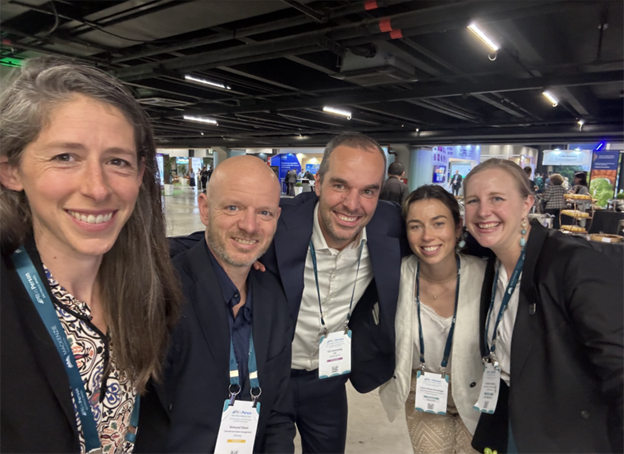
I soaked up sessions on nature-related stewardship to mitigate risks and achieve impacts, finance sector leadership on deforestation, and financing the future of agricultural supply chains. Along with a group of investors involved with the Investor Policy Dialogue on Deforestation, I met with the Brazilian Treasury about EcoInvest, an innovative initiative the Brazilian Government developed to attract private investments for the ecological transformation of the country. I also spoke on a panel about the prospects for the TFFF, the Tropical Forest Forever Facility, a new global fund launched at COP30 to financially reward countries that protect and sustainably manage their tropical forests – essentially flipping the economics of deforestation.
The conference was an opportunity to build on Green Century’s 14-year track record of winning protections for tropical forests and other wild places. In the last five years, Green Century’s team of shareholder advocates played a key role in convincing Bunge and Archer-Daniels-Midland – two of the world’s largest agricultural companies, both with significant operations in Brazil – to make time-bound no-deforestation and no-conversion commitments in their Latin American soy supply chains. Winning these agreements put both companies on record with goals and action plans to protect tropical rainforests and savannahs, including the Amazon rainforest and the Cerrado.

While the content of the sessions was phenomenal, the best part of this conference was meeting and building relationships with dozens of investors and stakeholders, all of whom are working tirelessly to ensure a sustainable future for humans and the millions of species on our planet.
And though it was only three days, this conference was inspiring. Not because there’s one coherent vision we’re all aligned on (there’s not) or we’ve figured out all the details (we haven’t), but because there are so many people working in so many different contexts, countries, industries, and sectors to transition our world to a nature-positive future. So many investors truly do understand that there is no planet B, and that protecting the environment is simply good business.
Do investors need to put more of their money where their mouth is? Absolutely. But it’s happening. Maybe not fast enough yet, but it’s getting faster. And based on the hard work happening on the ground, especially in tropical forest countries like Brazil, I think we’re about to take off.
–Annie Sanders, Director of Shareholder Advocacy