

I’m writing with an update on my trip to Indonesia, which wrapped up with an adventure into the rainforests of Borneo after a jam-packed week of meetings in Jakarta with an investor delegation to discuss nature and climate issues. I was thrilled to travel deep into the rainforest on a wooden riverboat to visit orangutans – wild animals that Green Century has been working to protect for more than a decade. The islands of Borneo and Sumatra are the only two places in the world where all three species of orangutans, each critically endangered, still live in the wild.
I flew in early from Jakarta to Pangkalan Bun, the main gateway town for travelers visiting the world-famous Tanjung Puting National Park to observe wild orangutans. After a quick stop for bug spray and snacks, my driver deposited me at the docks, where our boat’s crew was preparing for the trip.
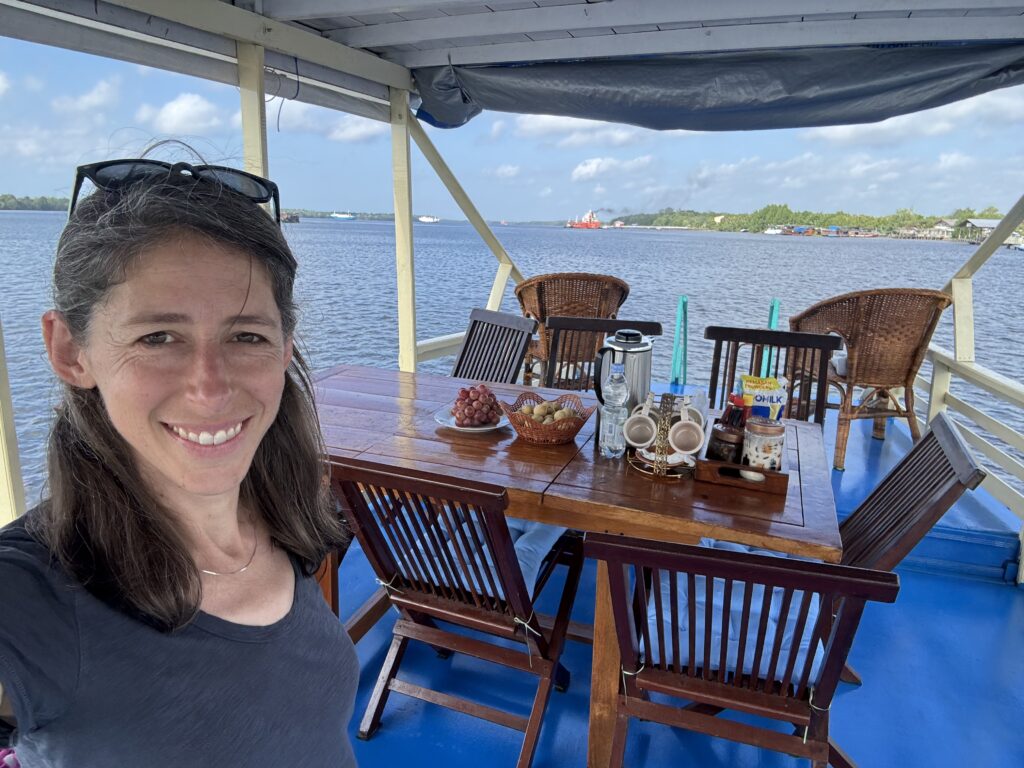
My six travel companions, whom I met for the first time on this trip, hopped aboard throughout the morning, having flown in from France, Italy and England to embark on our shared adventure. Our boat, called a klotok, would be our communal sleeping space, dining room, and living room for three days as we wended our way deep into the rainforest.
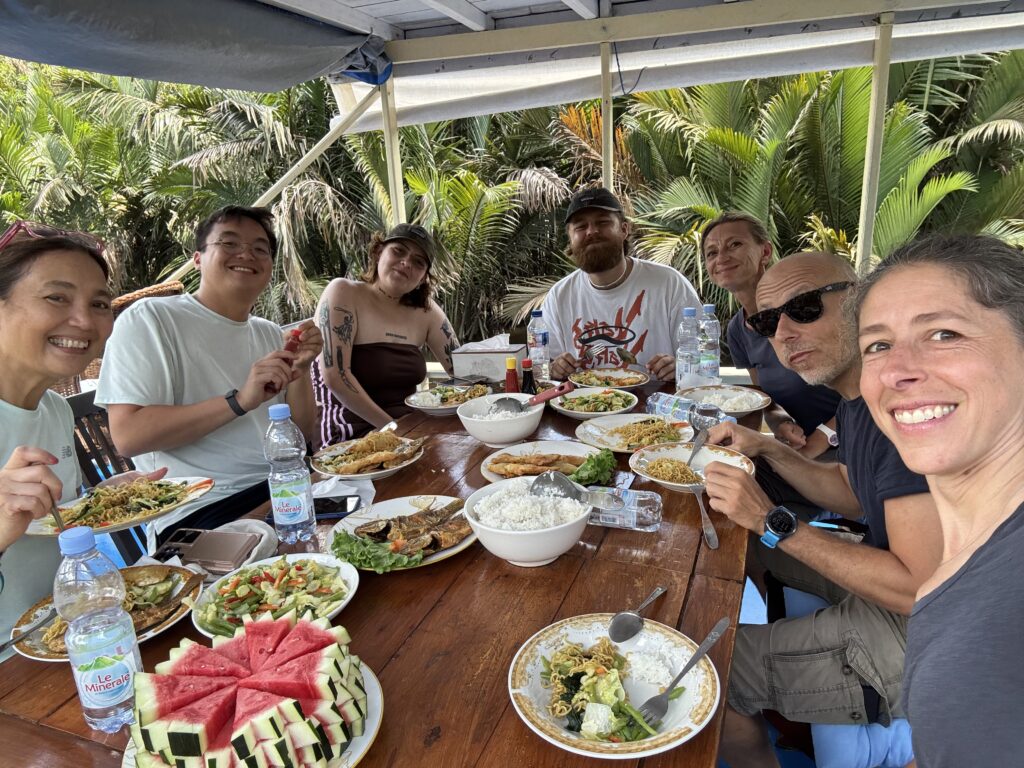
After motoring along the Sekonyer River for a couple hours, we jumped out for a short, sweaty hike to the first orangutan feeding station. We watched in awe as magnificent orangutans of all sizes and ages emerged from the trees to clamber onto a wooden platform and feast on fruit provided by park rangers.
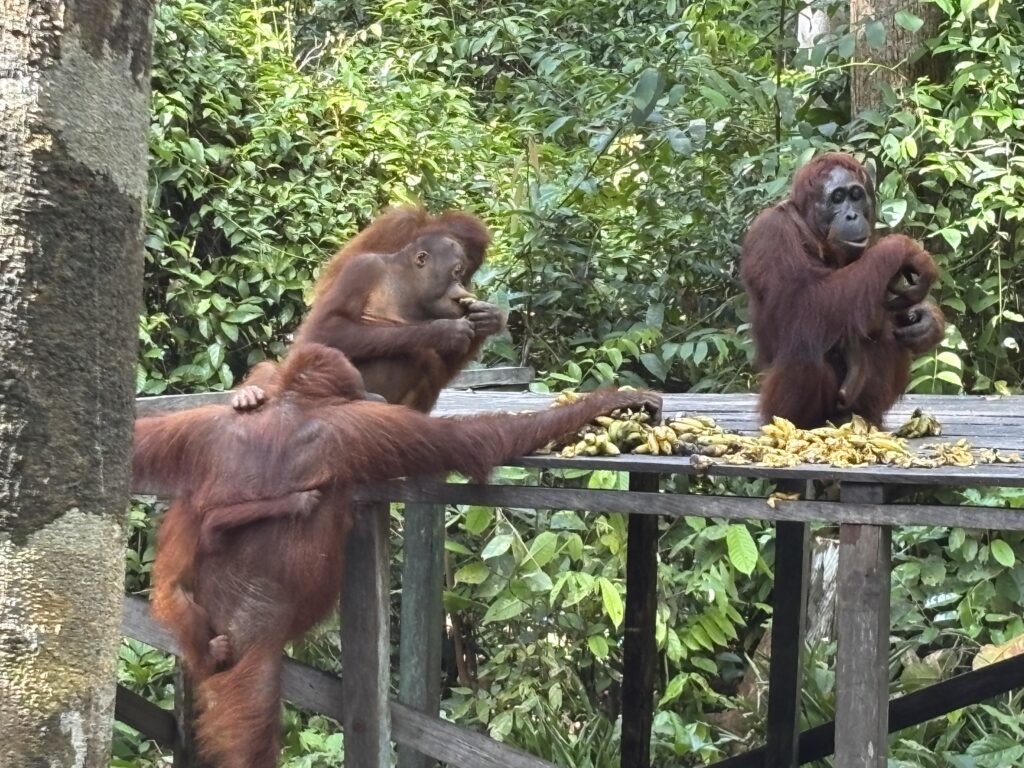
The jungle hummed around us with hooting primate calls, vibrant birdsong, and a near-deafening insect chorus as we quietly watched the orangutans enjoy their meal and swing off into the forest. Several hundred pictures later, we reboarded our klotok for lunch and a short ride to the second feeding station. There, the resident orangutans were also ready to eat, swarming the feeding station amid a troop of long-tailed macaques tearing into bunches of ripe bananas.

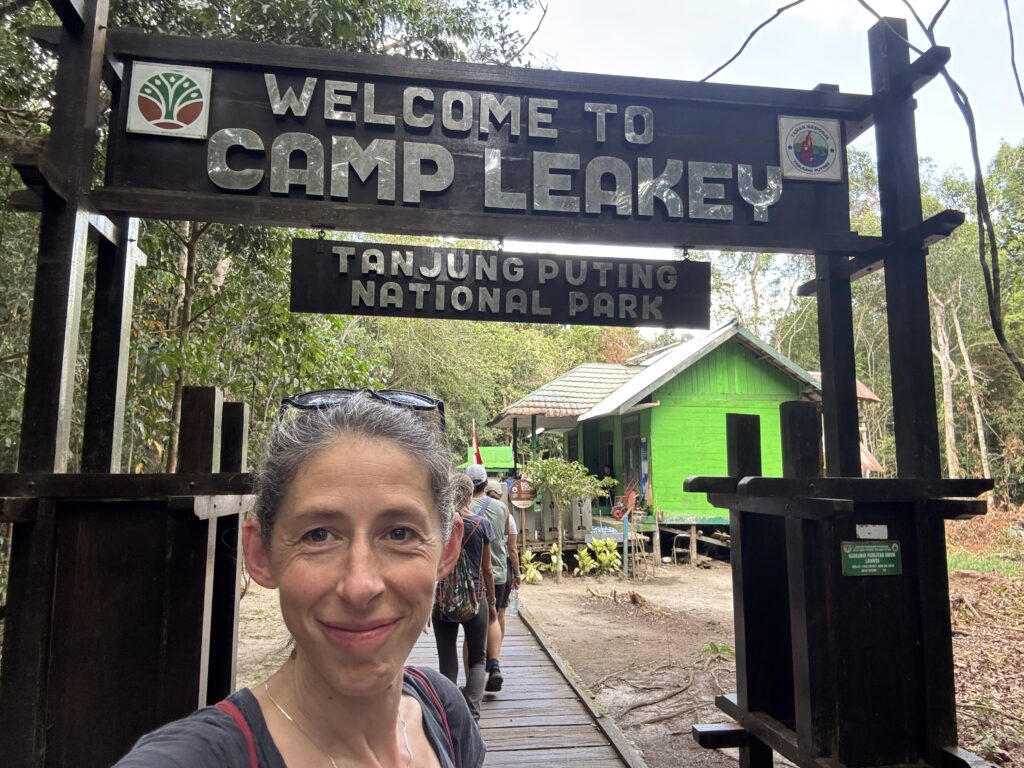
The next day, after a surprisingly restful slumber where we were lined up like sardines on the boat, our group headed to Camp Leakey. This famous orangutan research and rehabilitation center was established in 1971 by Biruté Galdikas, whose patron Dr. Louis Leakey also mentored Jane Goodall and Dian Fossey in their studies of primates. Today, Camp Leakey remains the site of one of the longest continuous wild orangutan studies in the world.
At Camp Leakey, we saw our smallest orangutan yet – a premature, 1-month old baby, resting on its mother’s neck as they made their way to the feeding platform. The mother moved cautiously while the baby observed us with a watchful eye. Every baby orangutan born here is hope for the future of this species, whose population hovers just over 100,000 after a sharp decline in recent decades due to deforestation for palm oil, extreme weather, and poaching.

As we motored out of the camp, the dense walls of forest on either side of our boat rose high, filled with proboscis monkeys and long-tailed macaques looking imperiously down upon us. The air was hot and heavy, filled with the constant buzzing of insects, birdsong, and the low puttering of the klotoks.

As darkness fell, fireflies lit up the riverbank’s towering ferns under the Milky Way’s long white streak across the night sky. Our band of strangers-turned-friends marveled together at the incredible orangutans we’d observed that day – their unbelievably long arms, their calm nature, their keen intelligence. That humans have driven them nearly to extinction is at once devastating and, sadly, unsurprising.

The good news is that public awareness of the orangutan’s plight has grown in recent years thanks to NGO campaigns and investor initiatives to end deforestation for palm oil – in which Green Century has played a key role for more than a decade.
With the support of our investors, we were proud to continue that work in Indonesia this year, and we will continue to advocate for tropical forest and wildlife protections so that orangutans and all threatened species can rebound and thrive.
— Green Century’s Director of Shareholder Advocacy Annie Sanders