
With deforestation causing 12-20% of global climate emissions, forest protection was a key focus for Green Century Capital Management (Green Century) at New York Climate Week 2025, a major annual event that brings together global leaders to accelerate climate action. At this year’s event, we built on our decades-long leadership on forest protection by engaging with governments, corporations, fellow investors and more on the imperative to drive down deforestation and scale nature-based solutions at this critical moment for our planet.
Photo credit: Conference organizers, Aligned Incentives
And 2025 is unquestionably a critical year. For one, it’s when science says we need to eliminate deforestation to avoid the worst consequences of global warming. It also marks the submission deadline for the next generation of Nationally Determined Contributions under the Paris Agreement. These represent national efforts to reduce climate emissions and are key for keeping the global 1.5°C warming cap within reach.
Given the stakes, I was pleased to have the opportunity to attend a Business Roundtable event with Indonesian government officials to discuss their efforts to drive down deforestation in the country that is home to the third largest tropical rainforest in the world.

Photo credit: US-ASEAN Business Council
Key time to pursue deforestation issues in Indonesia
“We need to change the financial calculus for companies and governments to make forests worth more standing.”
— Annie Sanders, Director of Shareholder Advocacy
At the event, I directly addressed Indonesia’s Special Climate and Energy Envoy, the Chief Investment Officer of its sovereign wealth fund, and its Chamber of Commerce Chairman regarding the financial risks of tropical deforestation and financial benefits of pursuing food security and forest protection in tandem.
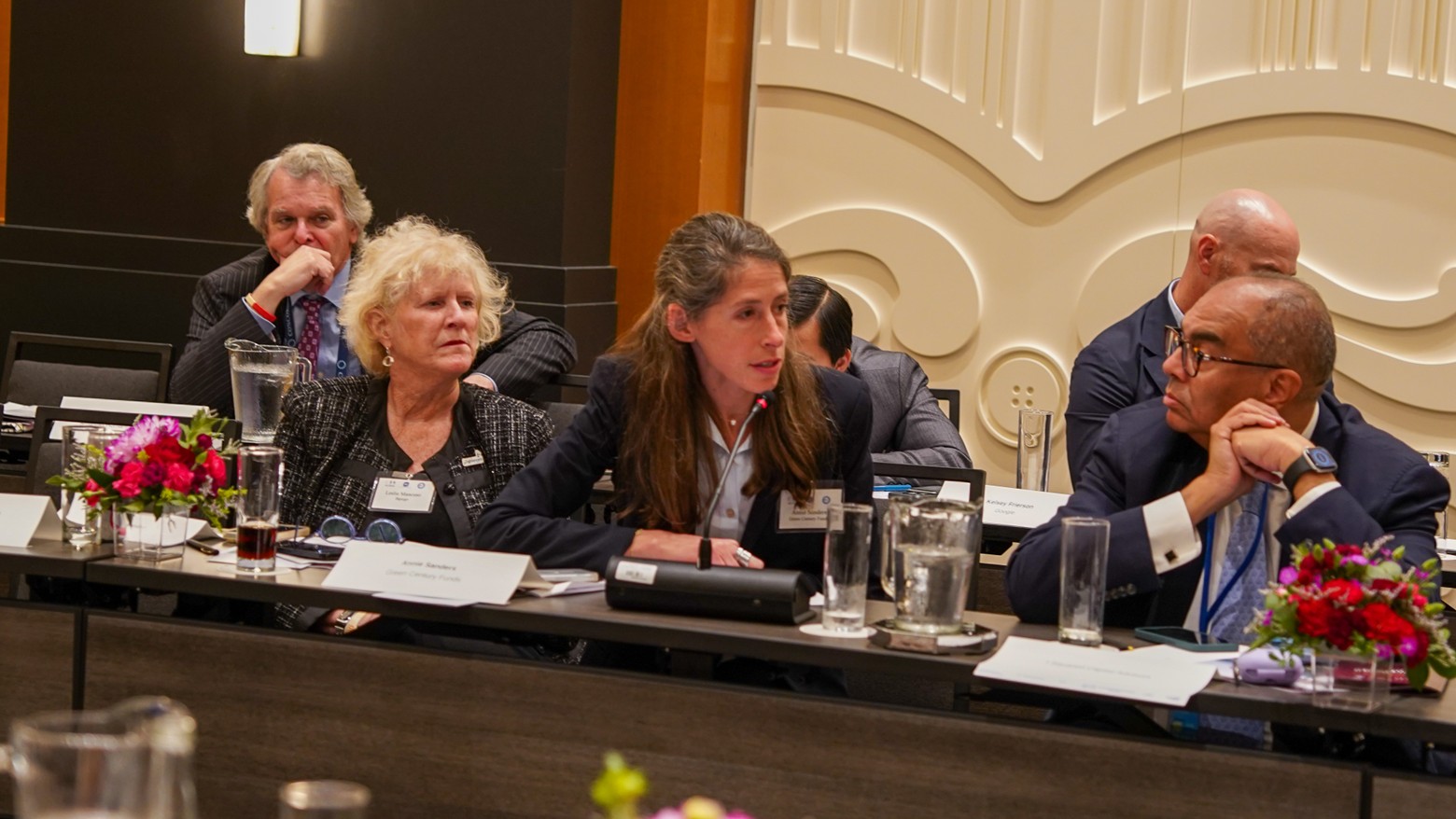
Photo credit: US-ASEAN Business Council
We raised these issues because of an effort the government is pursuing called the Food and Energy Estates. It has earned the unfortunate moniker of “the largest deforestation project the in world” because millions of hectares of rainforest – an area the size of Belgium – are slated to be razed for rice and sugar cane plantations to ensure food and energy security. And while these are important goals, research shows ample potential to divert this development onto the country’s millions of hectares of already degraded lands, protecting rare species like the tree kangaroo and birds of paradise. Fortunately, the government seems open to the idea, provided a strong financial case can be made in addition to an ecological one.
I not only got a chance to make that case at the Business Roundtable event, but also at a meeting I organized and recruited seven institutional investors to attend the following day with Special Climate Envoy Hashim Djojohadikusumo, brother of Indonesian President Prabowo Subianto. In the meeting, we conveyed investors’ support for clean energy, nature and climate finance opportunities, and tropical forest protection. Hashim was well-informed, thoughtful, and direct, and we parted ways with plans to continue our conversations on these important issues.

Photo credit: Conference attendees
Rainforest Protection is Vital for Economic Stability
A few hours later, I hopped the subway to a reception hosted by the Royal Norwegian Consulate General in New York and Rainforest Foundation Norway. This event convened representatives from government, business and Indigenous communities to spotlight the role of rainforest protection in achieving global goals related to climate, biodiversity, and human rights.
At the gathering, Norway’s Deputy Foreign Minister emphasized that protecting rainforests is vital for economic stability, and actor Alec Baldwin told some personal anecdotes about his engagement with the cause. I then shared some remarks alongside James Deutsch, CEO of Rainforest Trust, about how different sectors can work together to stop deforestation and scale nature-based solutions.
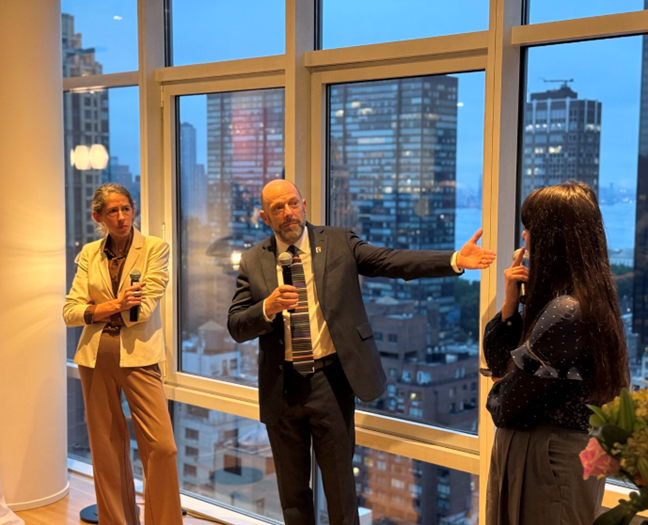
Photo credit: Royal Norwegian Consulate General in New York
A key point I emphasized is that we all have a role to play in redirecting financial flows to support nature and climate solutions that can scale capital quickly to protect forests around the world. In short – we need to change the financial calculus for companies and governments to make forests worth more standing.

Photo credit: Royal Norwegian Consulate General in New York
Climate Week: Inspiring and Aspirational
While New York Climate Week was a sprawling mass of talks, roundtables, speeches, panels and meetings that are impossible to sum up, it was one thing to many people: inspiring. Yes, we are living in scary times – politically, culturally, environmentally – but we are also on the cusp of a massive global shift toward a clean energy, nature-positive economy driven by technological innovation, capital mobilization, and policy change that is ushering in, albeit in fits and starts, a more sustainable future.
It’s going to be messy, and it won’t be linear. It’s also by no means a sure thing. But this past week was a good reminder that thousands of people are working tirelessly to innovate, collaborate, advocate and advance solutions to the greatest global challenge of our time. Because at the end of the day, there is no planet B. It’s simply good business to ensure that nature is around for the long haul.
— Annie Sanders, Director of Shareholder Advocacy